
Recently, international energy prices and global sovereign bond yields have risen in tandem, becoming a key driver of macroeconomic market volatility. ACE Markets, through systematic tracking of Federal Reserve policy signals, the supply and demand structure of US Treasuries, and global central bank cycles, believes that the previously widely anticipated "short-term energy shock" is gradually solidifying into a persistent obstacle to inflation, making the Fed's September interest rate decision increasingly difficult and signaling that global sovereign bonds are entering a new round of structural repricing.
The Fed's September decision was met with increasing divergence, and the assessment of a "transient shock" is facing a potential reversal.
We have observed that the disruption to energy supplies caused by the Middle East geopolitical conflict that began in late February has lasted far longer than the initial "several weeks" expected by policymakers and the market. The continued rise in energy costs is retesting the Federal Reserve's core assessment that the inflation shock was "temporary," and also presents a more complex policy environment for the September 15-16 interest rate meeting than before.
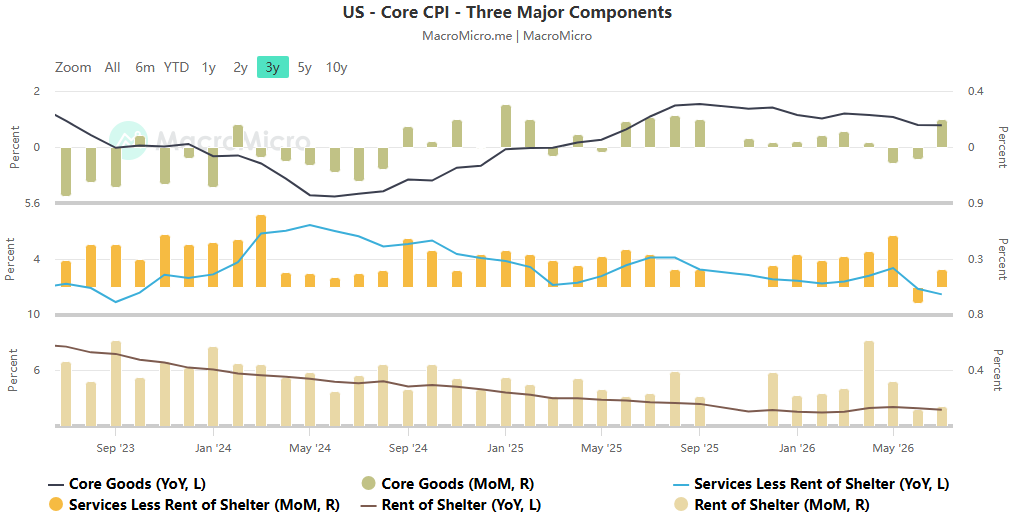
Judging from internal statements within the Federal Reserve, policy divergences have widened further since the July meeting. Fed Governor Barr explicitly signaled a hawkish stance, stating that a rate hike should be decisively initiated this month if inflation does not show sufficient signs of easing. He also pointed out that the decline in US inflation has stalled since last year due to a combination of factors, including tariffs, geopolitical conflicts, and AI infrastructure development. In the July decision to keep interest rates unchanged, three officials voted to raise rates, and the new round of energy price increases will undoubtedly further amplify the policy divergence among decision-makers.
In stark contrast, U.S. Treasury Secretary Bessant maintains that the current energy price surge is a supply-side shock, and with core inflation generally under control, there is no urgent need for an interest rate hike. ACE Markets believes this disagreement essentially stems from differing perceptions of whether the energy shock will trigger second-order inflation effects such as a wage-price spiral. Federal Reserve Chairman Warsh has consistently emphasized that policy should follow new data and market signals, offering no clear guidance on the September path. This makes the August inflation report, to be released on September 11th, a key variable determining the final policy direction.
US Treasury yields break through key levels, and the marginal effect of Treasury repurchase agreements in supporting the market diminishes.
According to ACE Markets' tracking data, the U.S. Treasury's intervention to expand its Treasury repurchase program had only a short-lived effect on supporting long-term yields. As of the latest trading day, the 30-year Treasury yield had risen to 5.27%, returning to pre-announcement levels; the 10-year Treasury yield was more than 10 basis points higher than at the time of the announcement, hovering around 4.8%, its highest level since January 2025; and the 2-year Treasury yield, most sensitive to Fed policy, rose 6 basis points to 4.40%, with market pricing indicating a roughly 70% probability of a Fed rate hike this month.
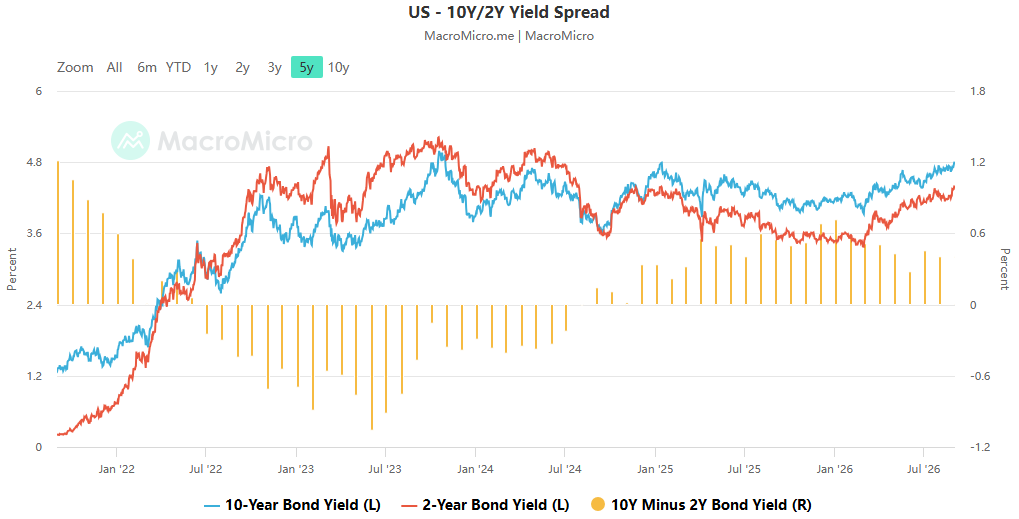
We believe that short-term repurchase operations cannot reverse the upward trend in US Treasury yields. The core reason lies in the deep structural support for the current bond market adjustment: the upward shift in the global neutral interest rate, the AI investment boom driving increased corporate bond supply, and fiscal expansion boosting government financing demand, all contributing to a new normal of higher real interest rates in developed economies. The Treasury's repurchase tools can only marginally smooth market fluctuations and cannot change the pricing logic of long-term interest rates, which is the fundamental reason for the rapid fading of the policy's effects.
Global sovereign debt is being repriced in unison, and expectations of tightening by major central banks are rising across the board.
This round of bond market sell-off is not an isolated phenomenon in the US, but rather a systemic valuation correction in global sovereign bonds. ACE Markets monitoring shows that the yield on Japanese 10-year government bonds has touched 3% for the first time since 1996, the yield on UK 30-year government bonds has risen to its highest level since 1998, the yield on German 30-year government bonds has reached a new high since 2011, and the yield on Australian government bonds has also hit a record high since data became available in 2016. The Bloomberg Global Sovereign Bond Index yield has climbed to its highest level in nearly 20 years.
In our view, the core driver of the synchronized rise in global yields is the market's repricing of the risk of "inflation consistently exceeding central bank targets" following the resurgence of energy prices. Brent crude oil prices have risen by approximately 13% over the past month, returning above $94 per barrel, coupled with tightening global liquefied natural gas supplies, further increasing the risk of sticky inflation. The market has now collectively revised its policy expectations for major central banks: the European Central Bank is expected to raise interest rates again at its meeting next week, the Bank of Japan's year-end key interest rate forecast has been raised from 1% three months ago to approximately 1.4%, and the probability of rate hikes by the Reserve Bank of Australia and the Reserve Bank of New Zealand has also increased significantly.
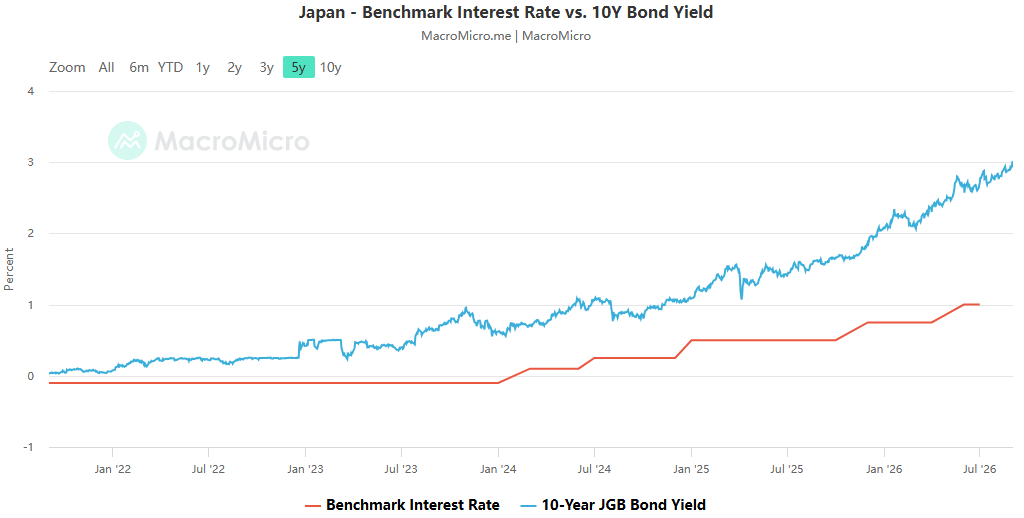
It is worth noting that the magnitude of the adjustment in the Japanese bond market is particularly noteworthy. After decades of deflation, Japan's inflation level has continued to rise, while the central bank's tightening pace has been relatively slow, putting sustained pressure on the yen. Although Bessant expressed his belief that the Japanese authorities would take action to strengthen the yen, the market continues to price in the Bank of Japan's accelerated tightening, which will further push up the central level of global long-term interest rates.
The logic of asset allocation has changed, and the attractiveness of fixed income has marginally recovered.
As global bond yields continue to rise, the relative cost-effectiveness of asset classes is subtly shifting. ACE Markets observes that the previously dominant strategy of "overweighting equities and underweighting bonds" is facing challenges from rising risk-free interest rates. The stable returns offered by bonds are becoming increasingly attractive relative to risky assets, and some international asset management institutions have begun to reassess their fixed-income asset allocation. We believe that regardless of whether the Federal Reserve ultimately raises interest rates in September, the trading logic of "higher interest rates lasting longer" has been confirmed by the market.
If an interest rate hike occurs in September, the market will further price in the potential for further rate increases, pushing long-term yields higher. If rates remain unchanged in September, the market will shift its rate hike expectations to December, making a short-term shift to a rate cut strategy unlikely. For investors, it's necessary to shift from "duration-based speculation during rate cut cycles" to "yield management under the new normal of high interest rates," reconstructing their asset allocation framework. Overall, the global macro market is currently in a rebalancing phase between policy expectations and fundamentals. The persistence of the energy shock, the stickiness of inflation, and the policy resolve of central banks will be the three core variables determining future asset price trends.