

With the September Federal Reserve interest rate meeting approaching, and August CPI inflation data exceeding expectations, the market's probability of an interest rate hike has risen rapidly. However, the political demands of the White House, the fiscal pressure on US debt, and the risk of a US-Japan exchange rate linkage together constitute a complex decision-making environment for Fed Chairman Warsh. ACE Markets, after integrating information from congressional hearings, inflation data, fiscal debt structure, and cross-asset correlation signals, believes that the core contradiction of this FOMC meeting goes far beyond "whether to raise interest rates by 25 basis points," but rather the difficult balancing act between the Fed's policy credibility, the political constraints of the election cycle, and the fiscal risks of US debt. The decision will redefine the pricing benchmarks for US Treasury bonds, the US dollar, and global risk assets.
The significant gap between fiscal policy reality and market expectations
U.S. Treasury Secretary Bessenter testified before the House Financial Services Committee, facing questions on U.S. Treasury repurchase agreements, U.S.-Japan currency intervention, inflation, and AI regulation. ACE Markets noted that this hearing highlighted multiple contradictions at the U.S. macroeconomic level, with the market often focusing only on public statements and overlooking the underlying constraints. Regarding rising U.S. Treasury yields, Bessenter attributed it to global factors, acknowledging that the deficit was a significant contributing factor. He argued that while expanding Treasury repurchase agreements did not reverse the rise in yields, it prevented further market deterioration. However, ACE Markets believes that repurchase agreements only marginally improve liquidity and are insufficient to offset the upward pressure on long-term interest rates from fiscal expansion, rising oil prices, and competition for AI capital.
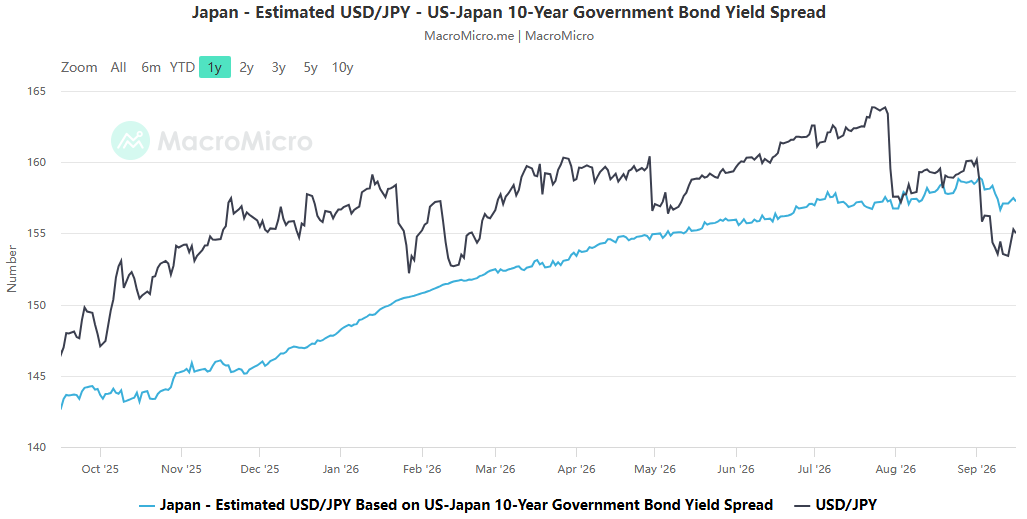
Regarding the joint US-Japan intervention in the yen, Bessant disclosed that the US invested less than $1 billion and profited, with the vast majority of the intervention funds coming from Japan ($96.4 billion). The US's participation in the coordinated intervention aimed to benefit its own exports while reducing the risk of Japan selling off US Treasury bonds. The policy pronouncements were primarily intended to deter short sellers; the medium- to long-term trend of the yen still depends on the pace of interest rate hikes by the Bank of Japan. Facing inflation inquiries, Bessant attributed the problem to the previous administration, citing data on people's livelihoods to support the current economic performance. ACE Markets warns that positive short-term data cannot eliminate the inflationary risks posed by oil prices and the fiscal deficit; if Trump's proposed $5,000 subsidy for all citizens is implemented, it will further increase fiscal and interest rate risks. At the hearing, the Treasury Department also explicitly rejected the AI lab's liability exemption; changes in AI regulation will indirectly affect capital flows and the competitive landscape for US Treasury bonds.
Inflation exceeded expectations, and hawkish pressure within the Federal Reserve continues to mount.
After the release of the August CPI data, both overall inflation and core inflation exceeded market expectations, with the rebound in energy prices being the main driver. The interest rate futures market priced in a September rate hike probability of over 85%, and some trades even began pricing in the possibility of multiple rate hikes by the end of the year.
ACE Markets analysis suggests that many market analysts tend to simply view interest rate hikes as a passive response to inflation data, underestimating the weight of the Federal Reserve's policy credibility. At the July FOMC meeting, three members opposed maintaining interest rates, publicly revealing internal policy disagreements. If inflation rebounds significantly in August and the Fed chooses to remain on hold, it will severely damage its credibility in combating inflation, leading to a consensus in the market that it is "tough in words but conservative in action," making further tightening of monetary policy more costly.
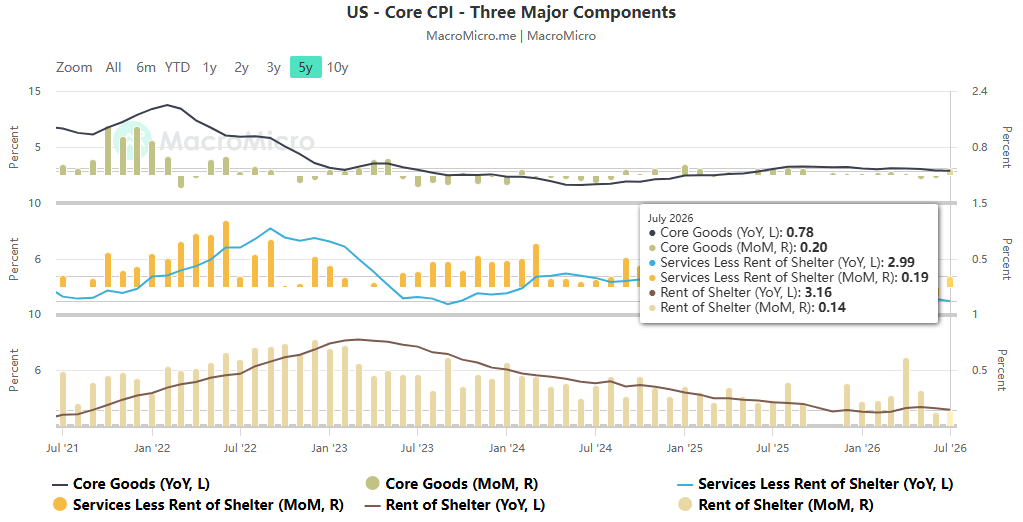
Of course, this doesn't mean that raising interest rates is a costless choice. Raising interest rates will further increase financing costs, and the interest burden on American households' mortgages, corporate loans, and the federal government's own debt will increase accordingly. This hidden cost is often overlooked by superficial interpretations that only focus on inflation figures.
The White House election cycle brings undeniable political constraints.
With less than two months until the US midterm elections, high inflation and the high cost of living have become major concerns for voters, and the White House has publicly expressed its desire for a low-interest-rate environment. ACE Markets observes a delicate situation: outwardly, the Federal Reserve expresses respect for its independence, but directly conveys its opposition to interest rate hikes. Warsh's communication with the White House is more frequent than before, which can mitigate direct conflict, but cannot eliminate objective political constraints. For the Fed chairman, yielding to the administration's demands would damage the Fed's long-term independence; however, a continued hardline approach to interest rate hikes would exacerbate tensions with the White House during the election cycle. Therefore, we believe that Warsh's optimal approach is unlikely to be extreme; he needs to find a balance between long-term institutional credibility and short-term political realities.
US Treasury yields near 5%: the psychological threshold of inflation and fiscal policy dual pricing risk.
The 10-year US Treasury yield is approaching the key psychological level of 5%. ACE Markets warns that 5% is not just a psychological threshold; it is priced in by two structural forces: fiscal policy and inflation. The US federal deficit continues to rise, with total government debt exceeding $40 trillion and public debt reaching 100% of GDP. Bessant proposed a strategy of resolving the debt through high growth, hoping that AI investment, the return of manufacturing, and tax cuts would drive the economy. However, real constraints are strong. In recent years, actual GDP growth has been significantly lower than the 3% target. Population structure and rigid social security expenditures are suppressing potential growth, making it difficult to solve the persistent deficit problem solely through economic growth.
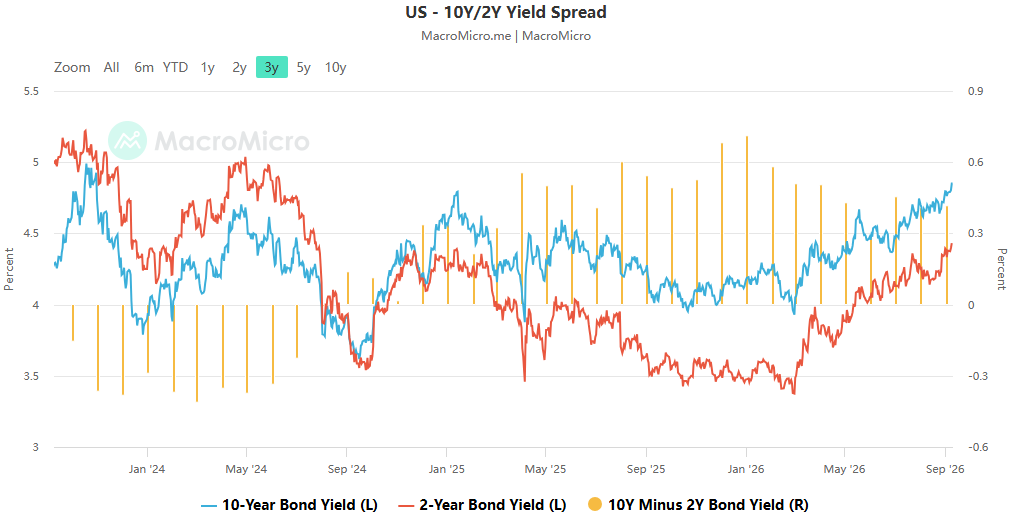
This creates a negative feedback loop: if the Federal Reserve continues to tighten, long-term yields will rise, government interest payments will expand, further amplifying the fiscal deficit, which in turn will push up inflation and Treasury yields. This is the real constraint that the bond market places on the Federal Reserve, and a key factor that Warsh must weigh when making decisions. Many market commentaries only discuss inflation, ignoring this fiscal constraint.
Benchmark Scenario and Asset Class Implications
Considering inflation figures, internal divisions within the Federal Reserve, political demands from the White House, and fiscal pressure on US Treasury bonds, we believe a 25 basis point rate hike in September remains the baseline scenario. However, a balanced strategy of "hawkish action, dovish guidance" is highly likely: using the rate hike to defend the credibility of anti-inflation measures and appease internal hawks; while maintaining cautious wording in the press conference, emphasizing policy data dependence, and downplaying expectations of further rate hikes, thus balancing political pressure and preventing a runaway rise in US Treasury yields.
When it comes to major asset classes, we draw three conclusions:
US Treasuries: Short-term yields are supported by rising interest rates, while long-term yields are pulled by both dovish guidance and fiscal pressure. The 5% mark for 10-year Treasury bonds will be repeatedly contested, and a one-way breakthrough is unlikely in the short term, but the high-level fluctuation center of interest rates has been systematically raised.
US Dollar Index: There is a high probability of a "buy the rumor, sell the fact" scenario, and it will remain strong before the interest rate hike is implemented; after the decision, the dollar is likely to face downward pressure due to dovish forward guidance and the continued strengthening of the yen.
Equity Market: Overall volatility risk is high before the interest rate hike takes effect. The technology and AI sectors are under dual pressure: on the one hand, high long-term interest rates are suppressing valuations, and on the other hand, the strengthening yen may lead to a concentrated unwinding of arbitrage positions. If the meeting releases a significantly dovish forward guidance, there will be a window for recovery after the negative factors have been fully priced in.