

Based on ACE Markets' end-to-end macroeconomic transmission analysis framework, we observe that the current US interest rate market is caught in a self-reinforcing dilemma: persistent inflation pushes up long-term Treasury yields, the Treasury intervenes in the bond market to suppress financing costs, and this intervention, in turn, weakens the anti-inflationary effect of monetary policy, further solidifying inflationary pressures. Most market analyses remain focused on interpreting PCE data in isolation or evaluating Treasury actions in isolation, failing to capture the mutually reinforcing and amplifying transmission chain between the two—the core thread determining the future trajectory of US Treasury bonds and the Fed's policy path.
Inflation stickiness is the root cause of the pressure on long-term debt and also the underlying incentive for fiscal intervention.
The ACE Markets research team believes that the upcoming July PCE price index is not merely an isolated inflation reading; it directly determines the central level of long-term bond yields and forms the underlying context for the Ministry of Finance's recent intervention in the bond market. Current market consensus anticipates a slight rebound in overall PCE month-on-month and a slight decrease year-on-year in July, with core PCE likely remaining at 3.3% year-on-year, while month-on-month growth is expected to be higher than in June.
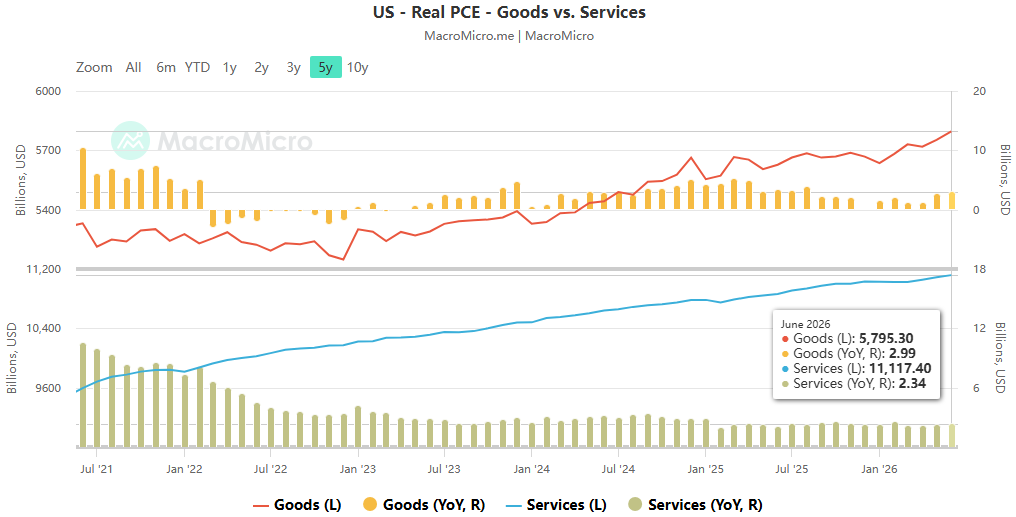
More noteworthy is that the US core PCE year-on-year growth rate has been above the Federal Reserve's 2% long-term target for 65 consecutive months, and the slope of the inflation decline is far lower than the market's early expectations. Our analysis reveals three implicit factors that are continuously supporting core inflation, long-term variables that many superficial analyses have failed to fully price in:
The expansion of the AI industry has driven up the costs of computer hardware and software, data centers, and these costs are gradually being incorporated into the inflation basket.
Rising valuations of financial assets have driven up portfolio management service fees, which are directly included in service inflation and become a stable contributor to core PCE.
The geopolitical conflict in the Middle East brings tail risks to energy prices. Once the energy premium is passed on to downstream industries, it will directly interrupt the process of cooling inflation.
This precisely explains why long-term US Treasury yields have consistently lacked the momentum to decline and continue to reach multi-year highs—the market is pricing in a long-term inflation premium. Meanwhile, persistently high financing costs are increasingly burdening the US fiscal interest burden; this fiscal year, US public debt interest payments have reached $1.17 trillion, a 15% year-on-year increase. It is under this pressure that the Treasury Department broke with convention and directly intervened by launching long-term Treasury bond repurchase operations, attempting to artificially suppress long-term yields. Inflation stickiness and fiscal intervention—the former is the cause, the latter the effect—form a clear transmission chain.
Two-way policy divergence: the inherent conflict between interest rate hike constraints and fiscal easing
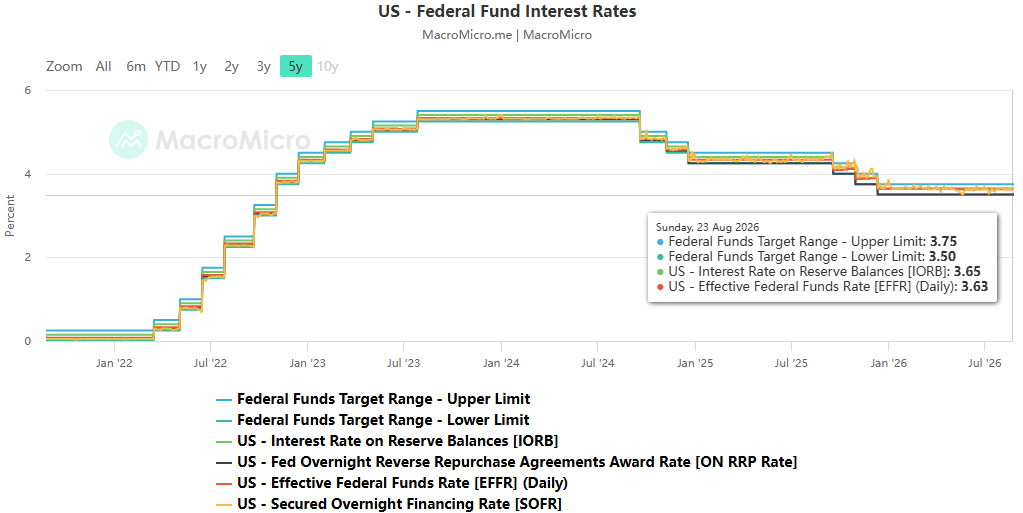
After cross-validating inflation data and fiscal policy, ACE Markets found that the Federal Reserve is caught in a typical two-way squeeze: inflationary pressures require monetary policy to remain tight or even retain the option of raising interest rates, while the fiscal authorities' intervention in the bond market is indirectly sending a loose signal, resulting in a clear divergence in the policy directions of the two macroeconomic management departments.
From an inflation perspective, although the market benchmark expects the Fed to hold rates steady in September, awaiting further confirmation from the August CPI and non-farm payroll data, the risk of a rate hike has never been completely eliminated. Currently, the market is pricing in a 40% probability of a 25 basis point rate hike in September, with an even higher percentage betting on a December rate hike. If the PCE data exceeds expectations and statistical anomalies are ruled out, the Fed's rate hike window will reopen. The July FOMC meeting minutes also clearly signaled that further rate hikes remain an option if inflation remains high.
However, fiscal actions are counteracting the tightening effects of monetary policy. The Treasury's long-term bond repurchase operations, ostensibly for "liquidity management," are essentially lowering long-term interest rates and injecting easing momentum into the market. If this successfully reduces the cost of real-economy financing such as mortgage loans, it will stimulate the economy and directly slow the decline in inflation. This also means that in order to achieve its 2% inflation target, the Federal Reserve may have to maintain high interest rates for longer, or even be forced to use more aggressive rate hikes to offset the impact of fiscal easing.
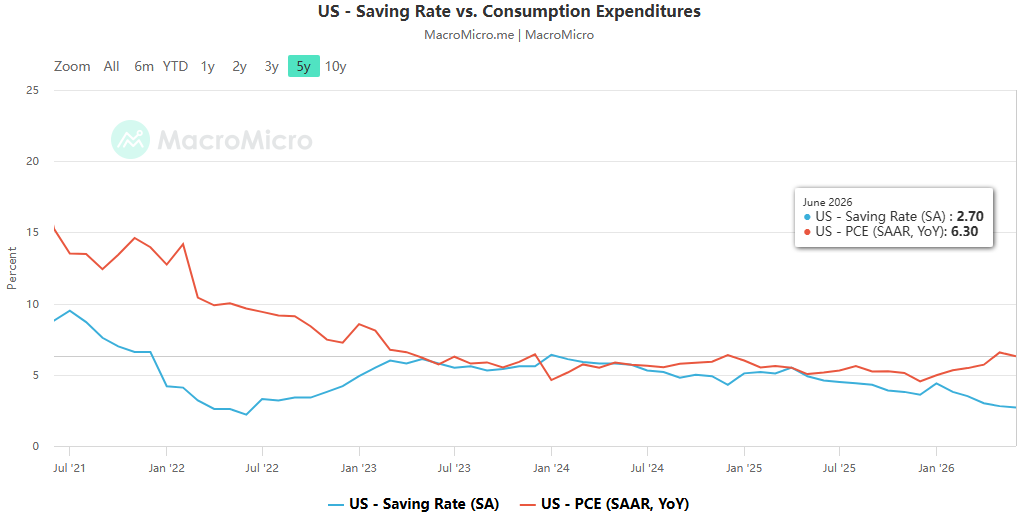
The uncertainty stemming from this policy divergence is amplifying market volatility. The Federal Reserve under Warsh's leadership had already abandoned traditional forward guidance, emphasizing that "policy should be determined by data and market prices." Now, the Treasury's public declaration that "market pricing is flawed" and its direct intervention in price formation not only undermines official credibility but also embarrasses the Fed's policy communication framework. The market can no longer rely solely on inflation data to judge policy direction; it must now incorporate the variable of fiscal intervention for a secondary calibration. This is precisely where ordinary traders are most prone to misjudgment.
Two key milestones: the Jackson Hole Economic Symposium and the cross-validation of the PCE statistical revision.
Within ACE Markets' analytical framework, two key events will jointly validate the evolution of the aforementioned predicament. These two events are not independent but will influence and reinforce each other.
The first key event is the upcoming Jackson Hole Economic Symposium. The market is widely focused on Warsh's statements regarding inflation and the path of interest rate hikes, but a deeper focus lies in his response to the Treasury's intervention in the bond market—whether he upholds monetary policy independence, criticizes fiscal intervention for disrupting market pricing, or compromises with administrative demands and tacitly allows fiscal dominance will directly determine the subsequent trend of long-term bond yields. This will also validate the market's core concern: whether the Federal Reserve's anti-inflation stance will soften due to debt management pressures.
The second key milestone is the comprehensive overhaul of the PCE statistical methodology, which took effect at the end of September. The U.S. Bureau of Economic Analysis will recalibrate the pricing rules for items such as computer hardware, portfolio management, and legal services, and retrospectively correct historical data. It is worth noting that the core categories affected by this adjustment are precisely the key variables currently supporting core inflation. If the revised inflation reading is higher than the current level, it will not only directly strengthen expectations of interest rate hikes and push up long-term bond yields, but it will also make the Treasury's intervention actions more passive, and may even force it to increase its intervention efforts, further exacerbating the contradiction of policy divergence.
In other words, the statistical reform is not just a simple technical adjustment. It will have a chain reaction through the “inflation readings → policy expectations → yield levels → fiscal intervention”, and its impact will spread to the entire interest rate market.
ACE Markets Summary and Trading Insights
In summary, the market is currently entering a negative cycle of "sticky inflation → rising yields → fiscal intervention → slowing inflation decline → long-term pressure on yields." Simply interpreting PCE data or evaluating Treasury actions in isolation fails to capture the full picture of the market. Many traders are accustomed to making decisions using a linear logic of "inflation data → Fed policy," neglecting the negative impact of slow-moving variables such as fiscal policy actions and changes in statistical rules on this core logic.
ACE Markets' multi-dimensional, interconnected analytical system can penetrate single events and capture logical corroborations across departments and timeframes, helping traders avoid cognitive biases caused by single-dimensional judgments. Going forward, it is recommended to focus on tracking the cross-validation of three key indicators: first, the difference between the actual trend of core PCE sub-indices and market expectations; second, Warsh's statements on fiscal intervention at the Jackson Hole Economic Symposium; and third, the specific revisions to the September statistical reform. The combined effect of these three factors is the core force determining the direction of US Treasury yields and the US dollar in the fourth quarter.
| Disclaimer: The above represents only the market views of the ACE Markets research team and does not constitute any investment advice. Market risks exist; please carefully assess your own risk tolerance before trading. |